Water Plant Now Has a Better Way to Fight Algae
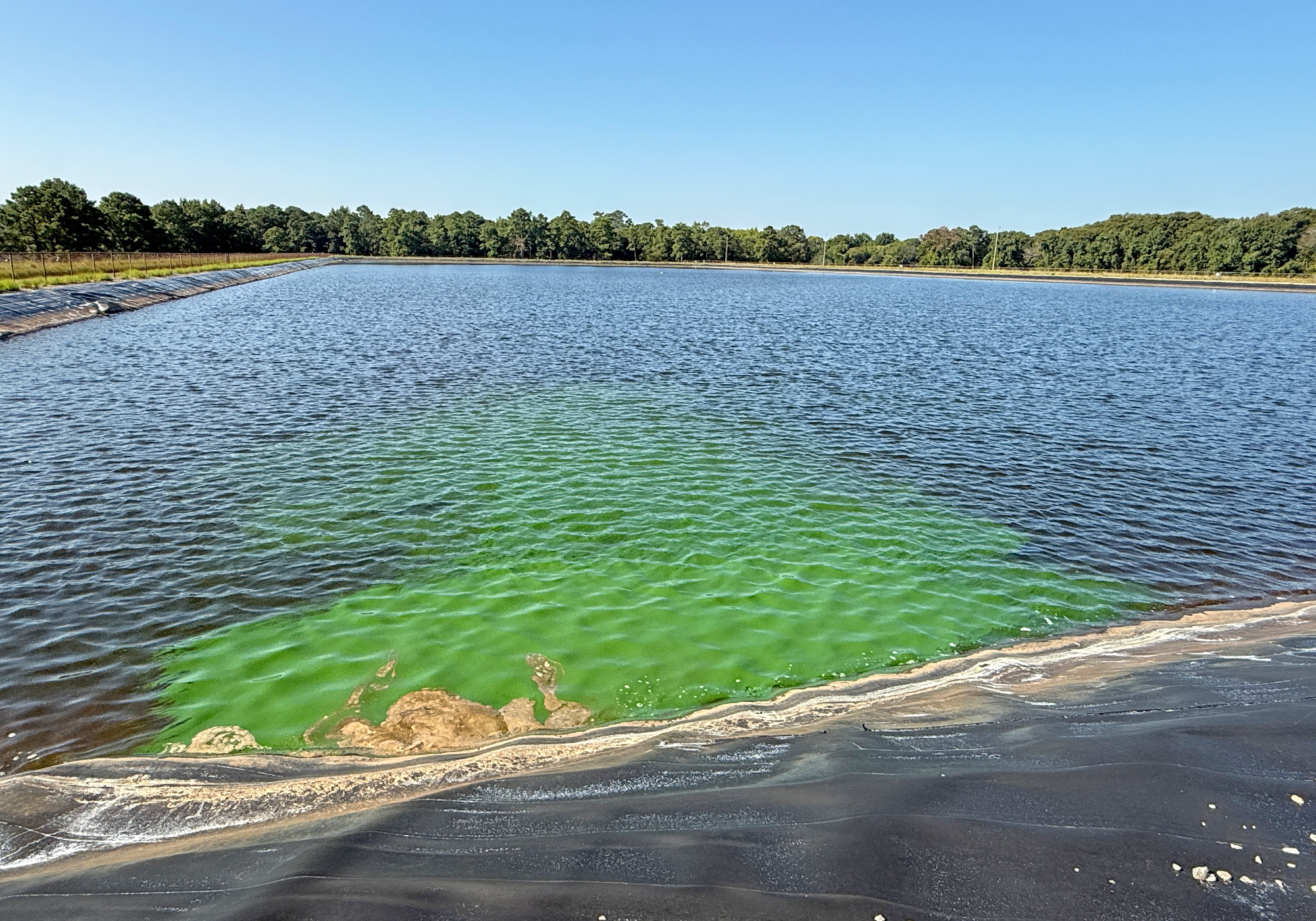
Blue-green algae along the edge of the impoundment.
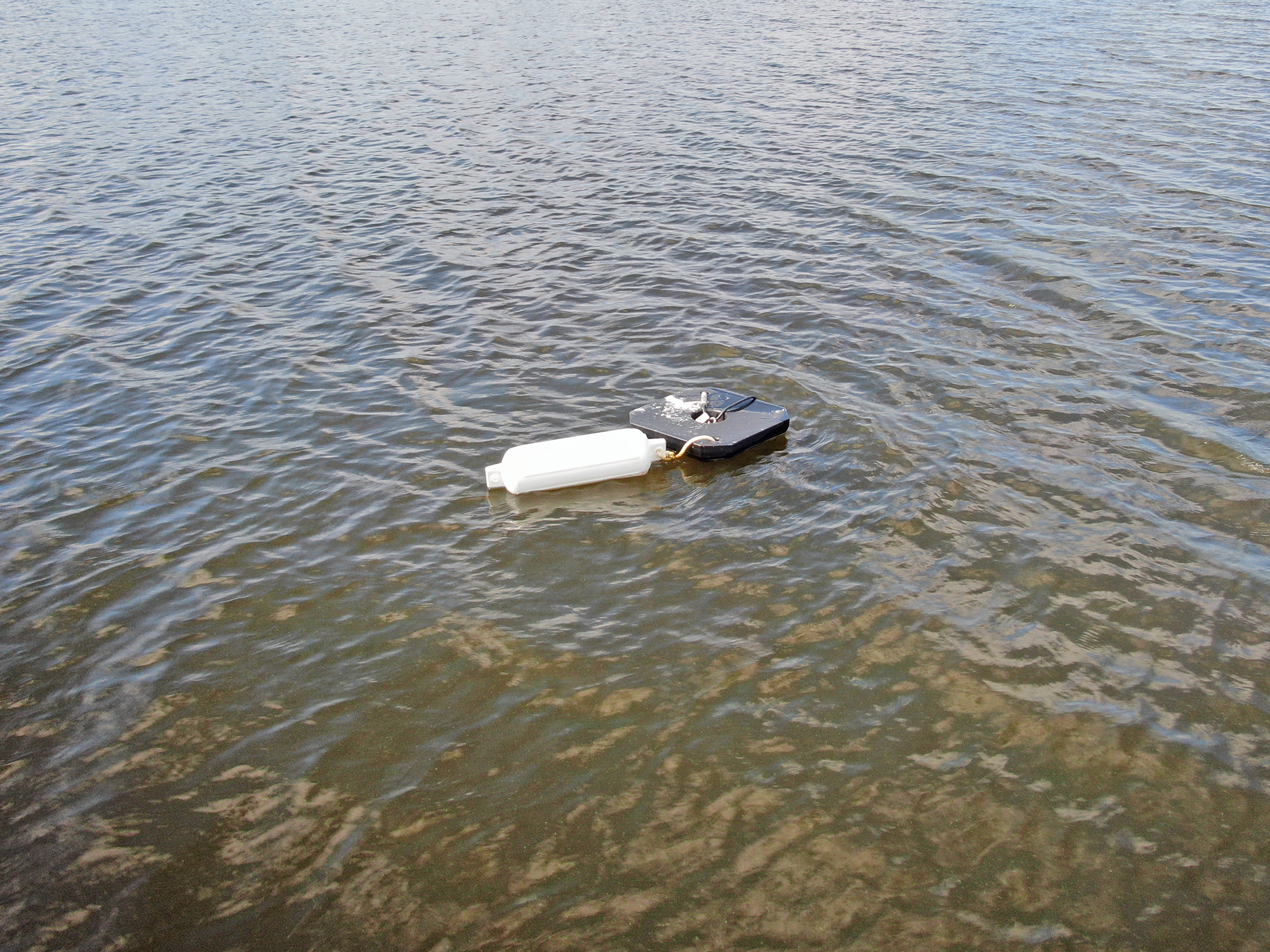
Staff at the Water Treatment Plant (WTP) are now armed with an ultrasonic destroyer to fight off what often appear as neon green invaders, otherwise known as algae. While this may sound like a weapon straight out of a superhero comic book, it looks much less imposing. It does, however, do a hero-level job in protecting an important first step of our water treatment process, the impoundment.
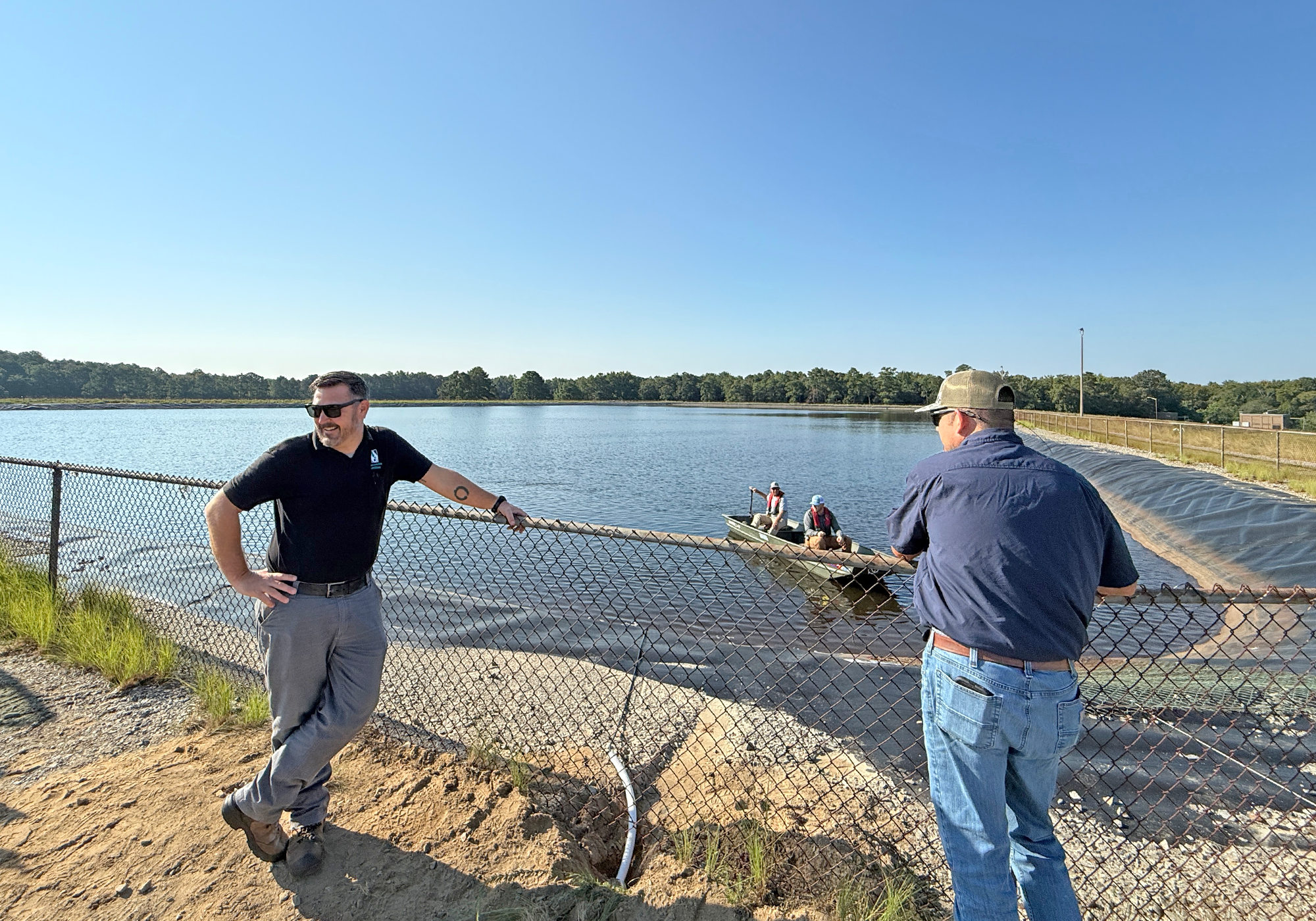
Turning river water into drinking water begins with bringing water from the Tar River into the WTP's pre-settling impoundment area that resembles a pond. The untreated water settles there for four days while heavy solids sink to the bottom. This is where the new destroyer leaps into action … or floats into action.
Algae play an important role in a healthy ecosystem, but they can quickly get out of control and cause all sorts of problems. There are different types of algae, but the type that affects most water treatment plants, like our own, is blue-green algae.
When blue-green algae grow out of control (and it’s the fastest growing of all the types), it can quickly destroy water value, clog a plant’s intake filters, and cause taste and odor issues – all of which can increase a treatment plant’s workload.
“Shutting down organics like algae in the impoundment means less going into the plant that we have to treat,” said Chad Flannagan, WTP Laboratory Manager. “With this type of algae, as fast growing as it is, we have to stay on top of it.”
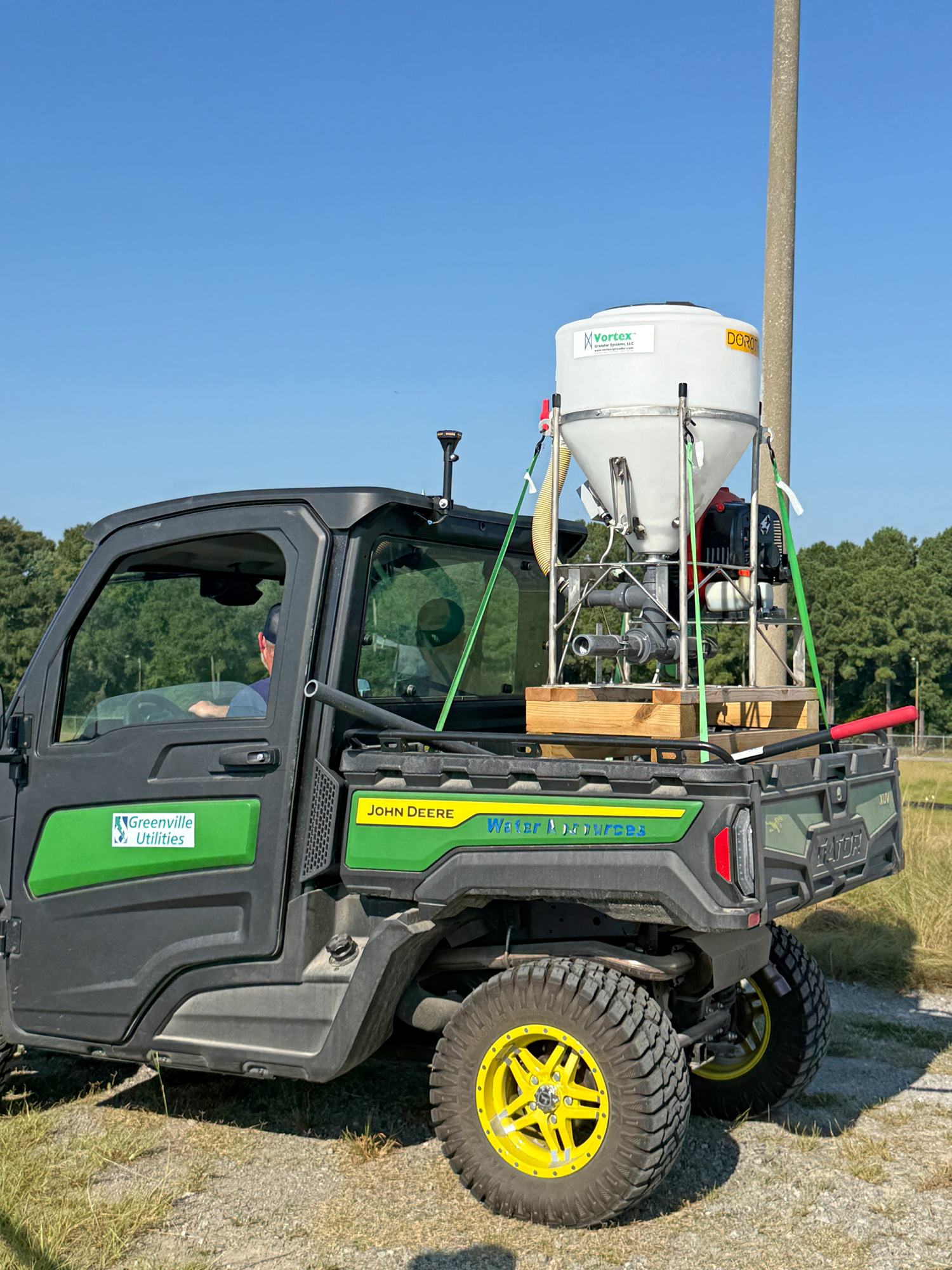
Before the ultrasonic destroyer was installed on September 3rd, Plant staff used a gas-operated blower to manually distribute granular hydrogen peroxide as a chemical treatment around the edges of the impoundment.
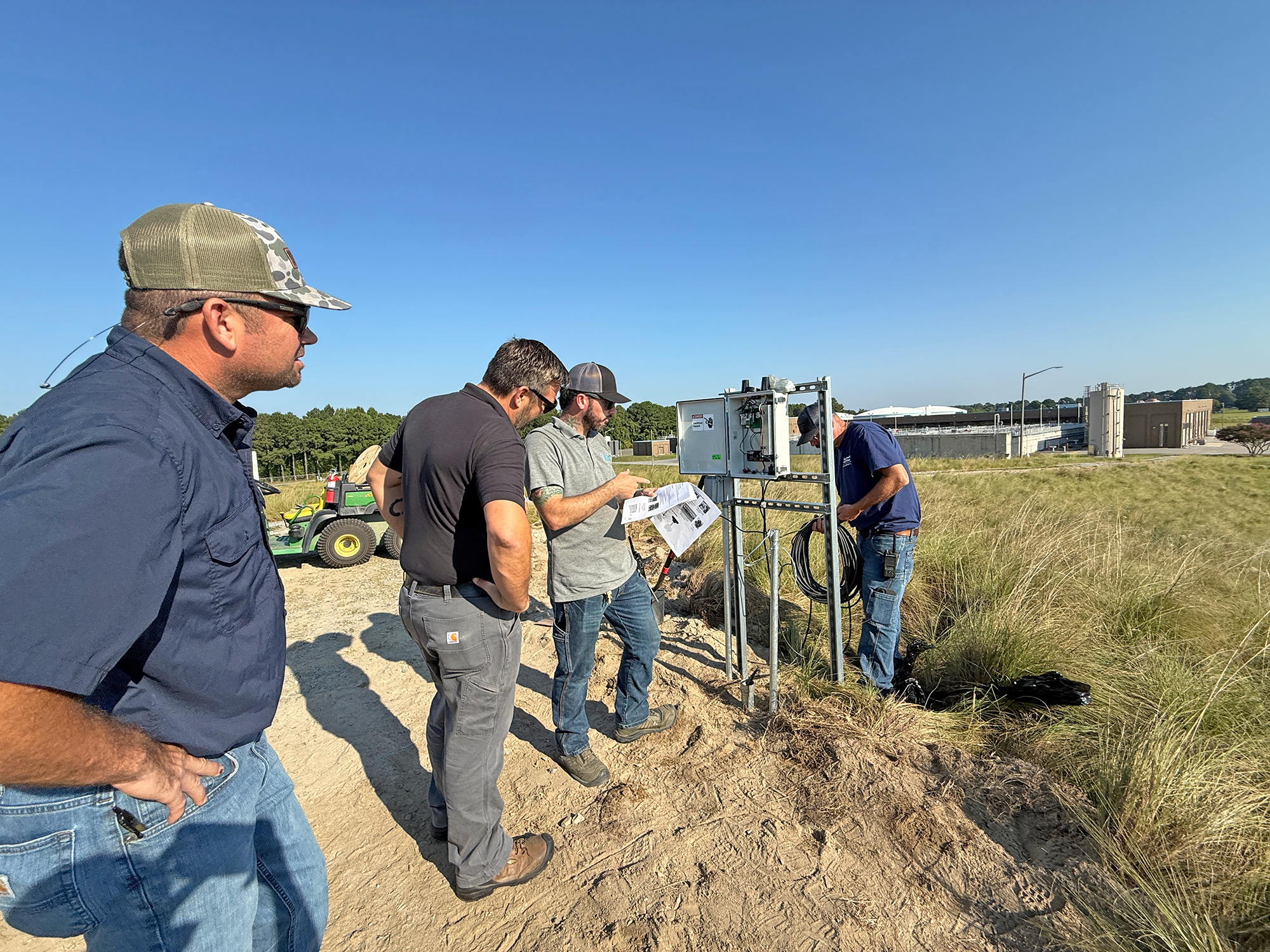
“We were going through about 60 bags a year, which cost around $6,000 and took about three to four hours a week for loading and dispersal,” Chad explained. “The cost of the ultrasonic unit was just under $7,000, and our maintenance staff did the installation.”
The unit is factory-guaranteed to last at least three years since it runs off direct-connect electricity instead of a battery. While the math speaks for itself on purchase cost savings, there are other benefits to the ultrasonic method. The unit is environmentally friendly, runs 24/7 on a very low wattage, is compact and quiet, and is far less labor-intensive than chemical applications.
How Ultrasonic Algae Control Works
“Algae needs sunlight in order to thrive,” explained Chad. “Ultrasonic devices don’t kill algae but render them helpless by breaking up the cells so they sink to the bottom where they cannot get sunlight.”
In keeping with the superhero theme, the sonic sound waves create pressure that bursts the toxic gas (cyanotoxins) inside the algae (Kapow!), making algae lose their ability to float. Sunken algae then naturally decompose at the bottom of the impoundment without releasing their dangerous gases into the water, which can now safely make its way into the treatment plant.