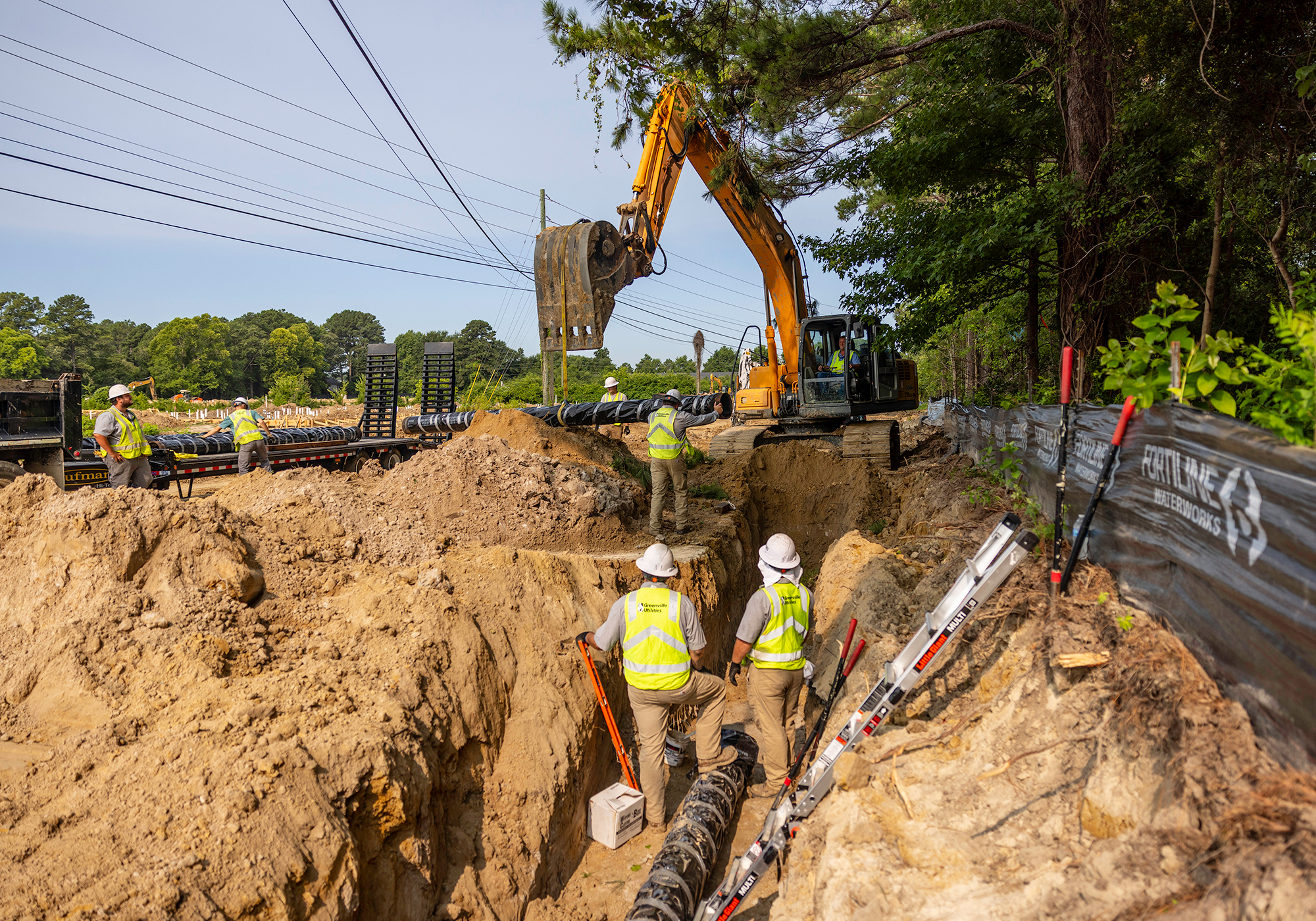
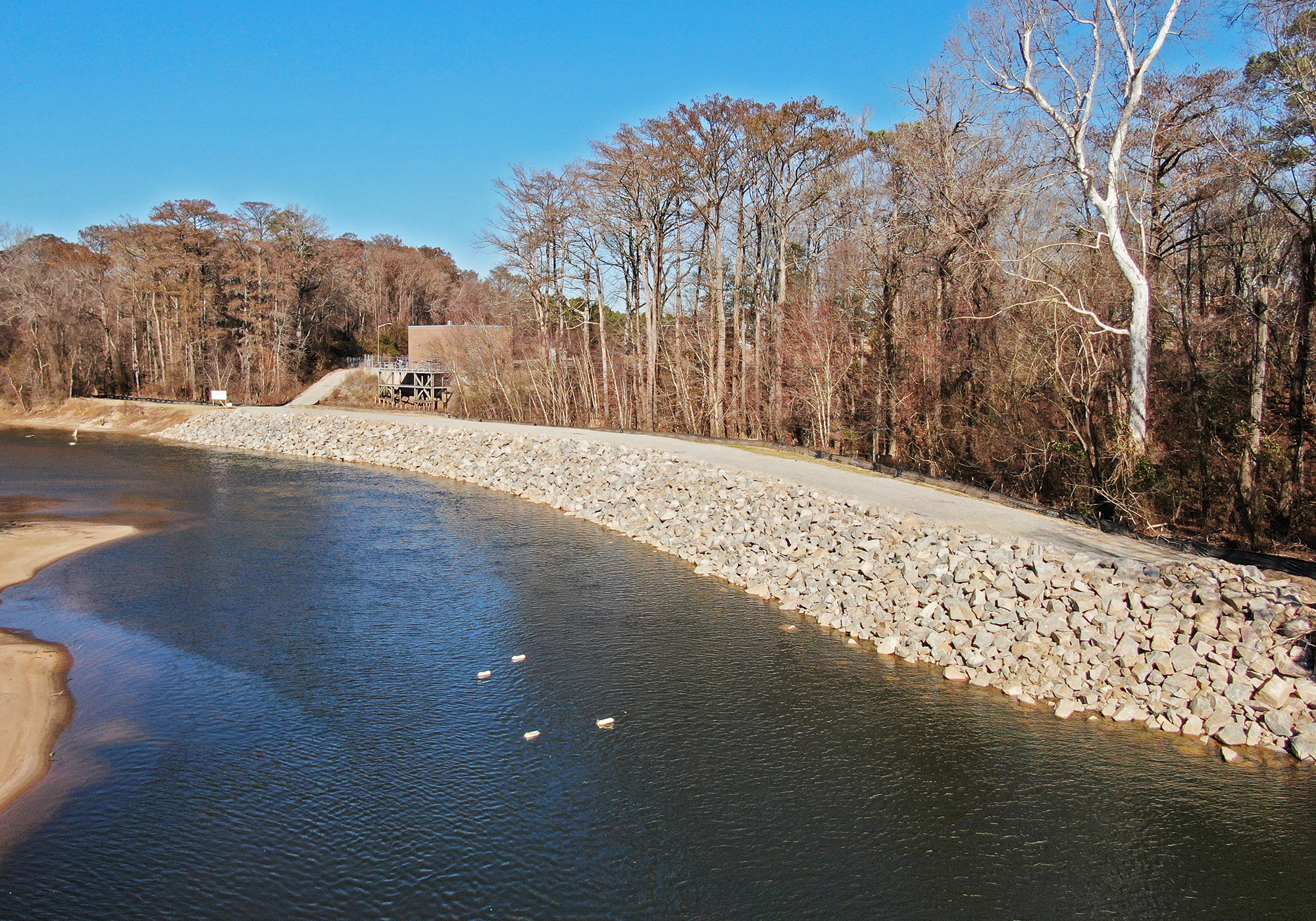
Work wrapped up on the Water Treatment Plant Riverbank Stabilization project in January not long after beginning in November 2025.
Riverbank stabilization is vital in preventing erosion and intake screen damage. The water treatment process begins with bringing water in from the Tar River through four intakes. Each intake has a pair of screens that keep out large debris.

Over the years, significant amounts of erosion along the bank have not only damaged the intake screens to the point they had to be repaired and replaced but also affected the stability of the riverbank. Riverbank stabilization is important for both the health of the Tar River and its aquatic inhabitants.
In September 2025, environmental consultants with Three Oaks Engineering put on scuba gear and surveyed the riverbed 500 meters upstream and 100 meters downstream of the Plant’s intake screens. This survey, which is required by the US Fish and Wildlife Service, showed the aquatic life near the intake screens is thriving and would not be disrupted by the GUC stabilization project.
The survey also noted this area of the Tar River supports a diverse group of mussels critical to the natural cleaning of our river water, as well as the endangered Neuse River Waterdog found only in the Tar and Neuse River basins.
For the past couple of years, our Water Resources staff have worked with the US Army Corps of Engineers on the best plan for repairing the riverbank. The Corps provided 65% of the funding for their recommended repairs, while GUC covers the remainder, which is approximately $757,000.
The Corps awarded the contract to Bering Straits Native Corporation.
This was a smooth project with no obstacles,” said Julius Patrick, WTP Facility Manager. “The contractor did a great job, and we are happy to have a stabilized bank to protect our infrastructure well into the future.”