The Big Freeze
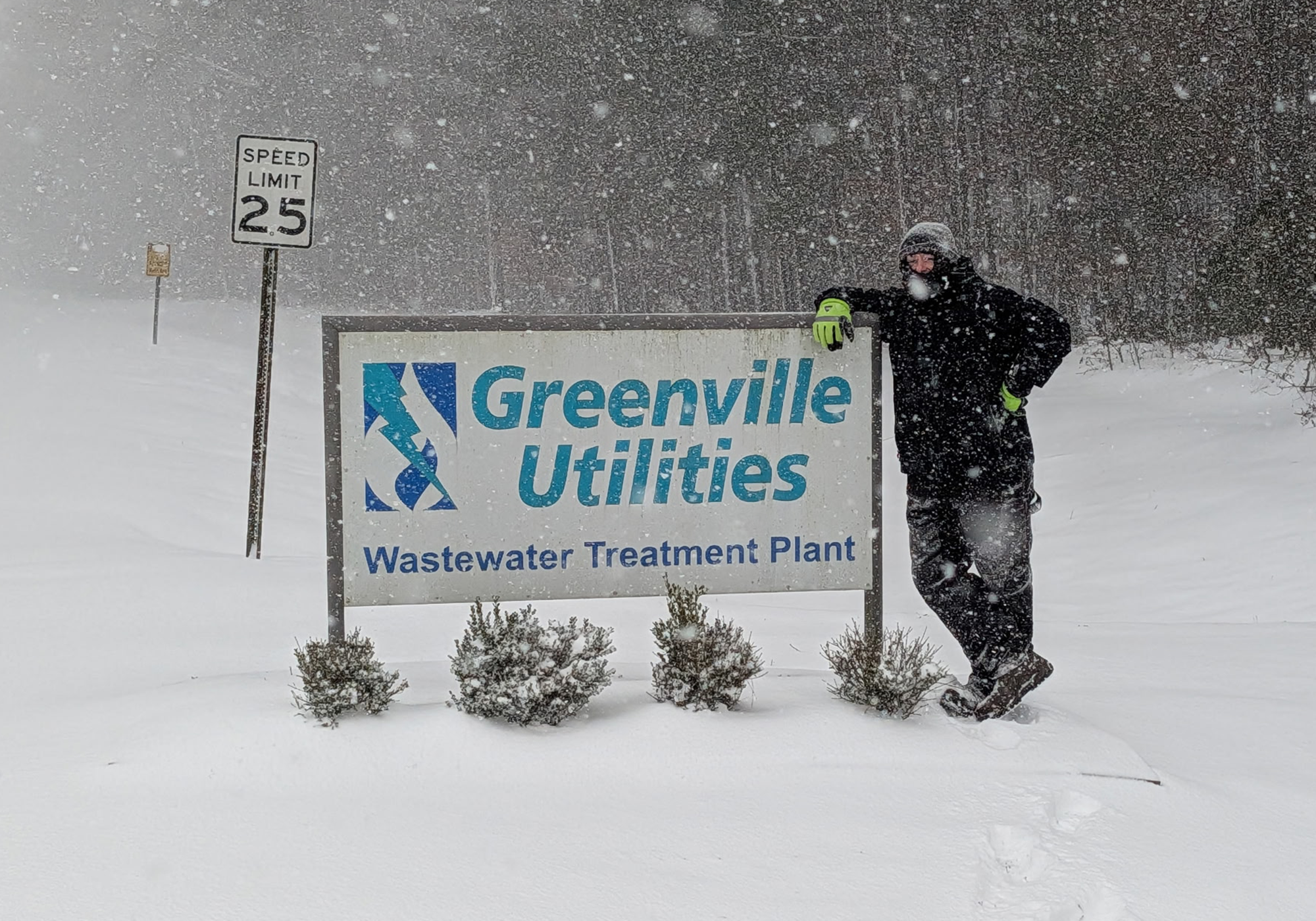
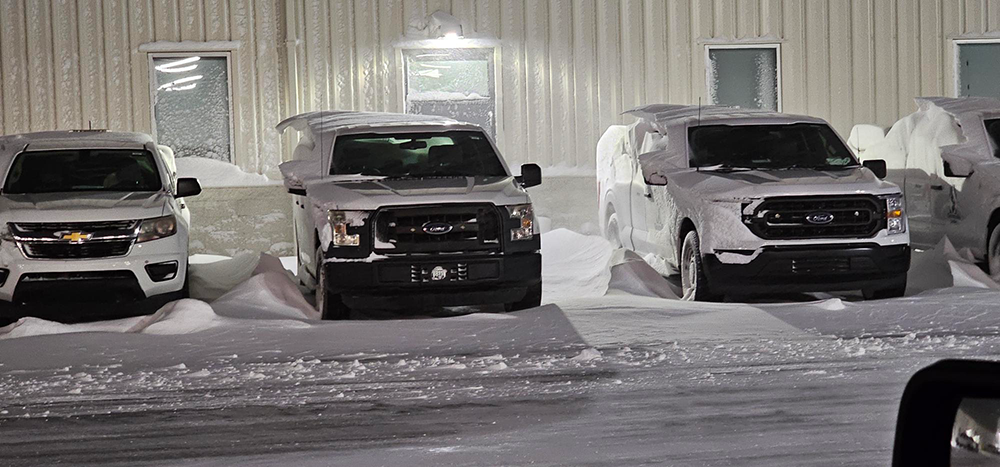
Greenville Utilities operations departments successfully handled the big freeze and thaw thanks to advanced preparation, coordination, and hard work. Winter storms Fern (January 23rd-January 27th) and Giana (January 30th-February 2nd) gave Eastern North Carolina a big freeze. Temperatures dropped as low as 12 degrees and barely – if at all – reached above freezing for nearly 14 straight days.
Winter Storm Fern brought ice and freezing rain, and Giana brought 11-14 inches of snow in GUC’s service area. Giana was the largest snow event in eastern North Carolina in 40 years.
The big freeze brought on unique challenges for each part of GUC operations.
Here’s how they handled it:

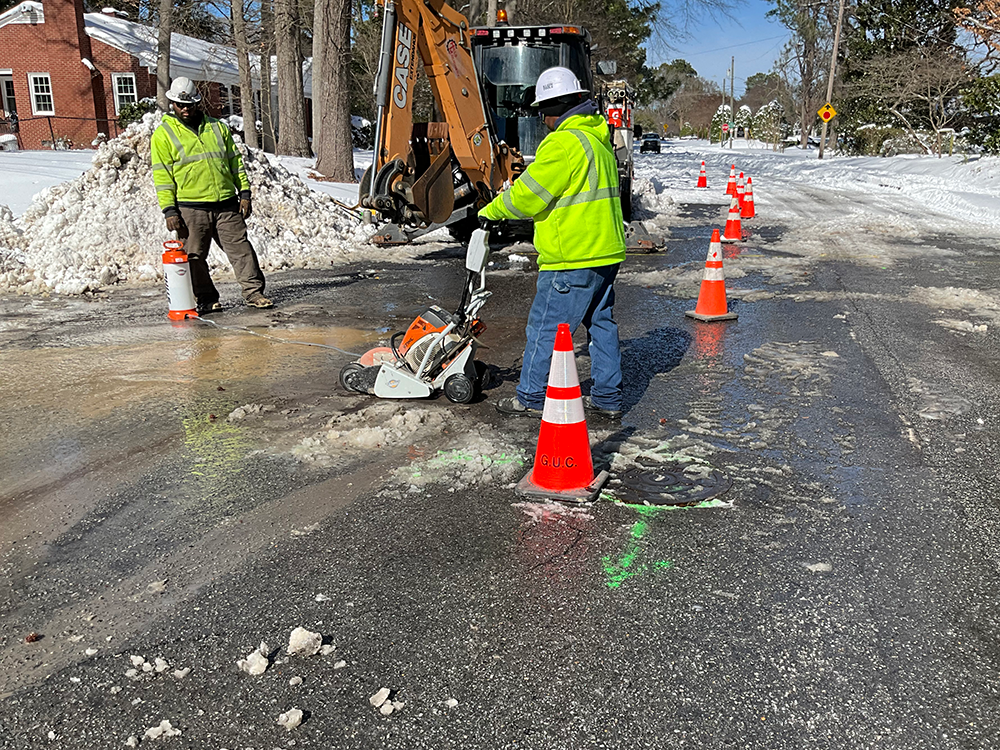
Water dealt with some significant challenges after the freeze, which were the consequences of the big thaw. When the ground freezes for as long as it did with the big freeze, it can shift as it thaws out, which can cause underground utilities like water mains to break.
In customers’ homes, water in exposed pipes underneath homes or in poorly insulated exterior walls can freeze and expand, cracking pipes open. When they thaw, water can flow freely, sometimes undetected.
Crews were called on to repair two large water main breaks as well as 26 emergency water shutoffs for customers to make repairs to their pipes.
Those broken and leaking water pipes both within GUC’s system and in residential and commercial service lines resulted in booming water demand.
Three to four million gallons of water per day (February 2-3) was lost due to thawing pipes that caused leaks due to water main and residential service breaks, and fire department and commercial connection breaks.
The Water Treatment Plant typically treats around 15 million gallons of water a day to disperse. The gallons of water dispersed reached 18.8 million on Monday, February 2nd, and 19.2 million on Tuesday, February 3rd.
Though water demand was high, Water Treatment Plant Facility Manager Julius Patrick commended the staff. “Everyone handled it well and ensured there was necessary coverage at all times,” Julius said.
Water demand quickly returned to normal once lines were repaired. Assistant Director of Water Resources Scott Farmer said, “Despite the water loss and the increased demand, water quality was never impacted.”
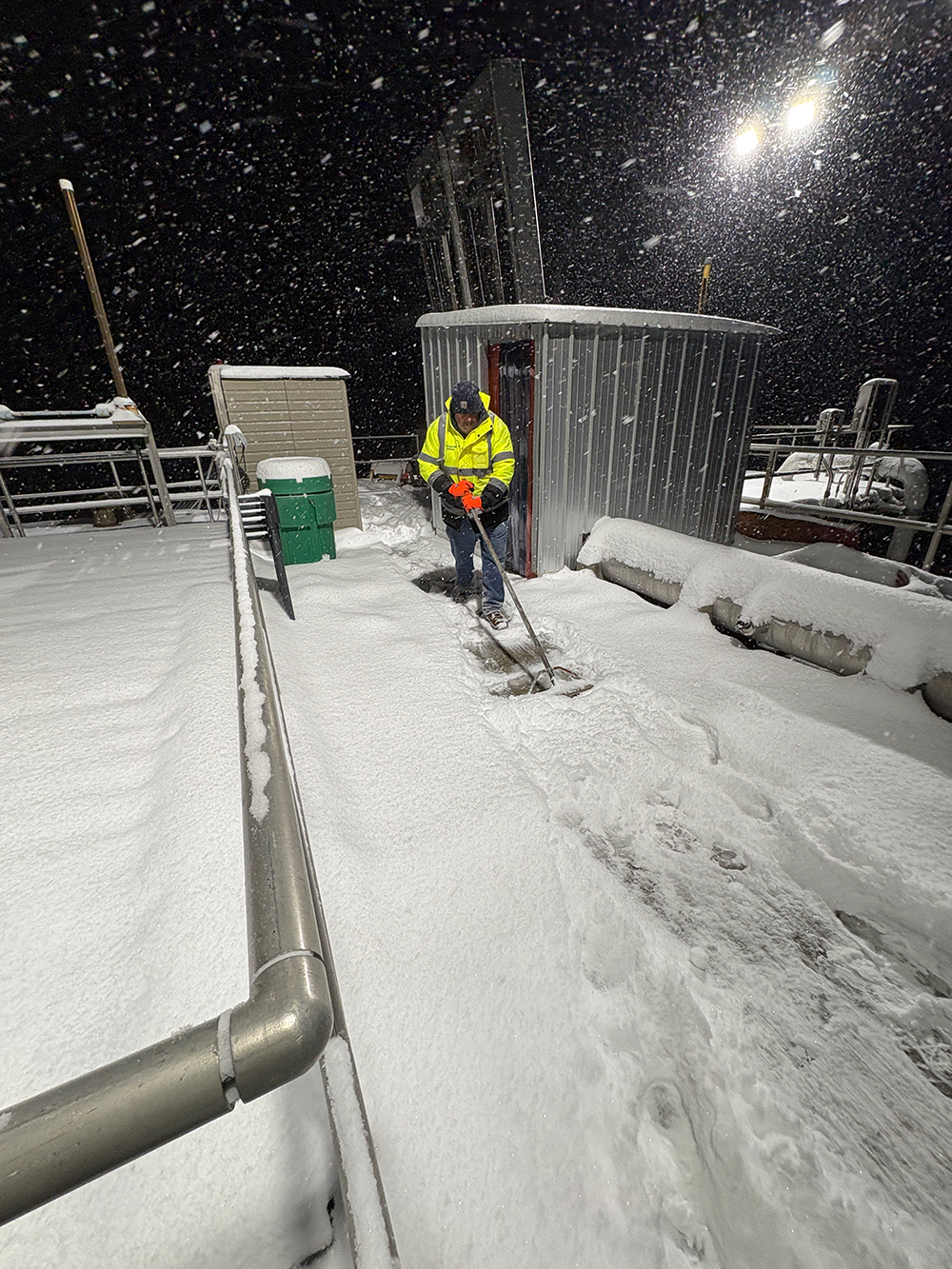
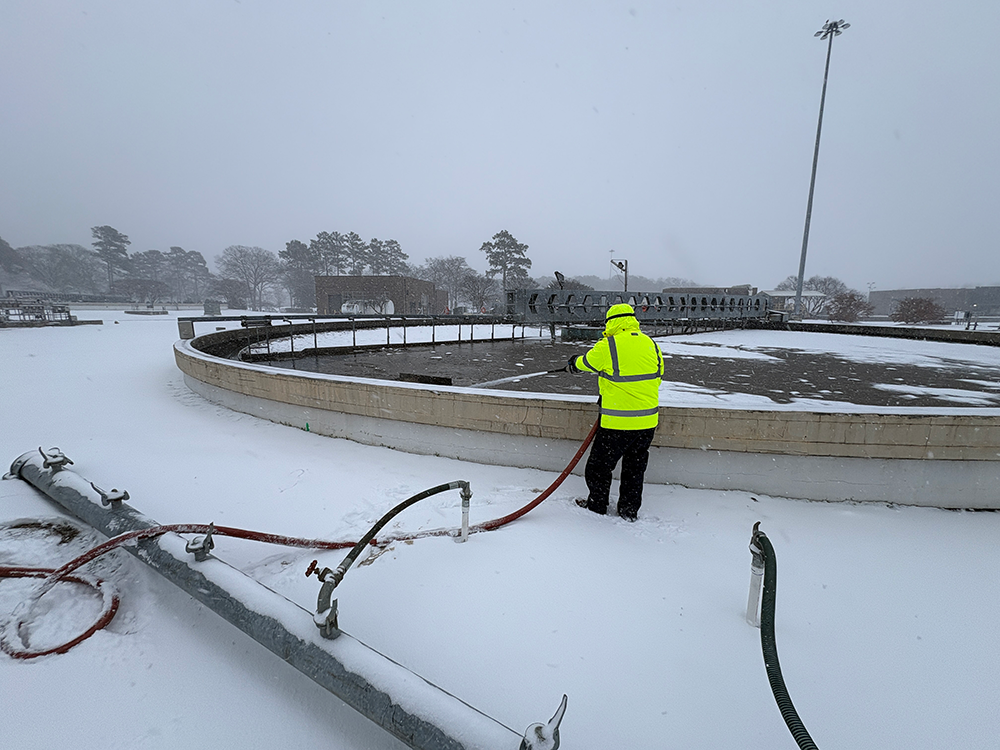
The Wastewater Treatment Plant was met with minimal issues. The biggest challenge was ensuring the process piping didn’t freeze. For safety purposes for Operators who oversee the 24/7 functioning of the Plant, walkways were of particular importance. The walkways were kept clear of ice and snow throughout both storm events.
“Ensuring everyone was able to do their work safely was of high priority. The staff did a great job managing the snow and ice,” WWTP Facility Manager Jason Manning said.

Natural Gas
The Liquified Natural Gas Plant was running and staffed around the clock for two straight days from January 31st to February 1st to meet the increased natural gas demand as customers were heating their homes and businesses. While GUC used the maximum pipeline capacity available, as demand grew, peaking on January 31st, the LNG tanks were eventually drained and required refill. To avoid buying spot gas at higher prices, 41 truckloads of gas were purchased to refill the LNG tanks.
Much like issues the Water Department faced, freezing and thawing ground caused leaks along connection points on the natural gas pipeline. Crews worked quickly, sometimes into the late evening and early morning hours, to fix the leaks.
Assistant Director of Gas Systems Carl Smith said, “Everybody stepped up and did a great job to make sure we were meeting our demand. It all came together very well. It was our first winter since the LNG Plant expansion, and it worked just as it was designed to work.”
Click here to read more about the LNG Plant and Natural Gas Demand.

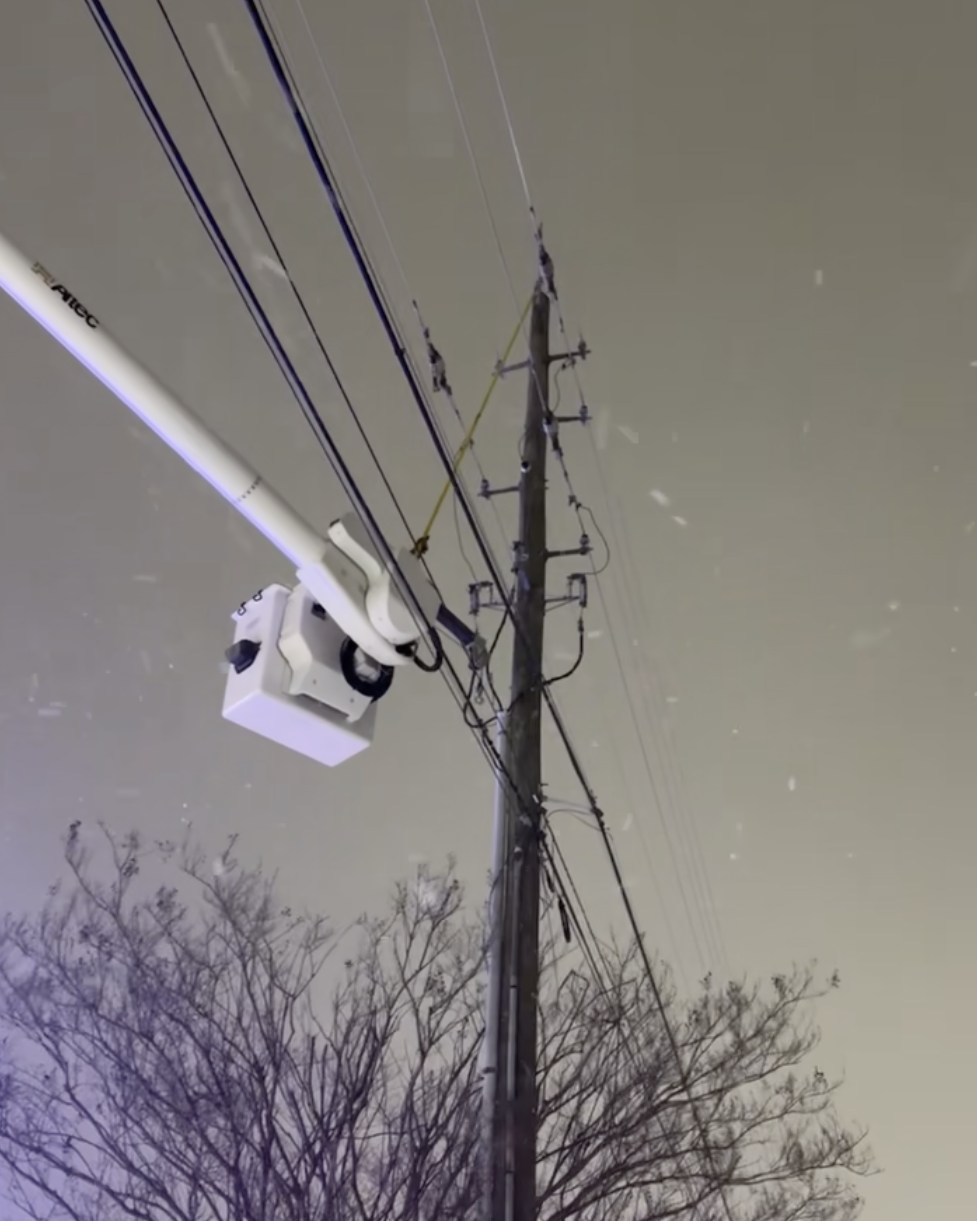
In preparation for the icy conditions, Electric staffed the standard weekly on-call crew, and designated additional backup in case there were increased outage volumes.
There were no circuit-level lock outs during Winter Storm Giana. However, with windspeeds between 40-60 mph at the height of the blizzard conditions, there were a few minor wind and tree related outages.
Crews worked throughout the storm to restore power as safely and efficiently as possible. Assistant Director of Electric Systems Jacob Swink said, “Personnel were rotated as needed to ensure adequate rest and maintain safe working conditions.”
Most of the outages reported were caused by load issues due to the extreme cold and significant growth in certain areas. Of our more than 76,000 electric customers, only 1,084 were impacted by outages during the storm.
During Winter Storm Fern, the Control Center dealt with various calls with majority of them concerning locked out circuits. Two circuit lock outs were due to equipment failure and one due to a fallen tree limb. Russ Carson said, “Everyone did a great job working as quickly as possible to answer calls and get crews dispatched.”

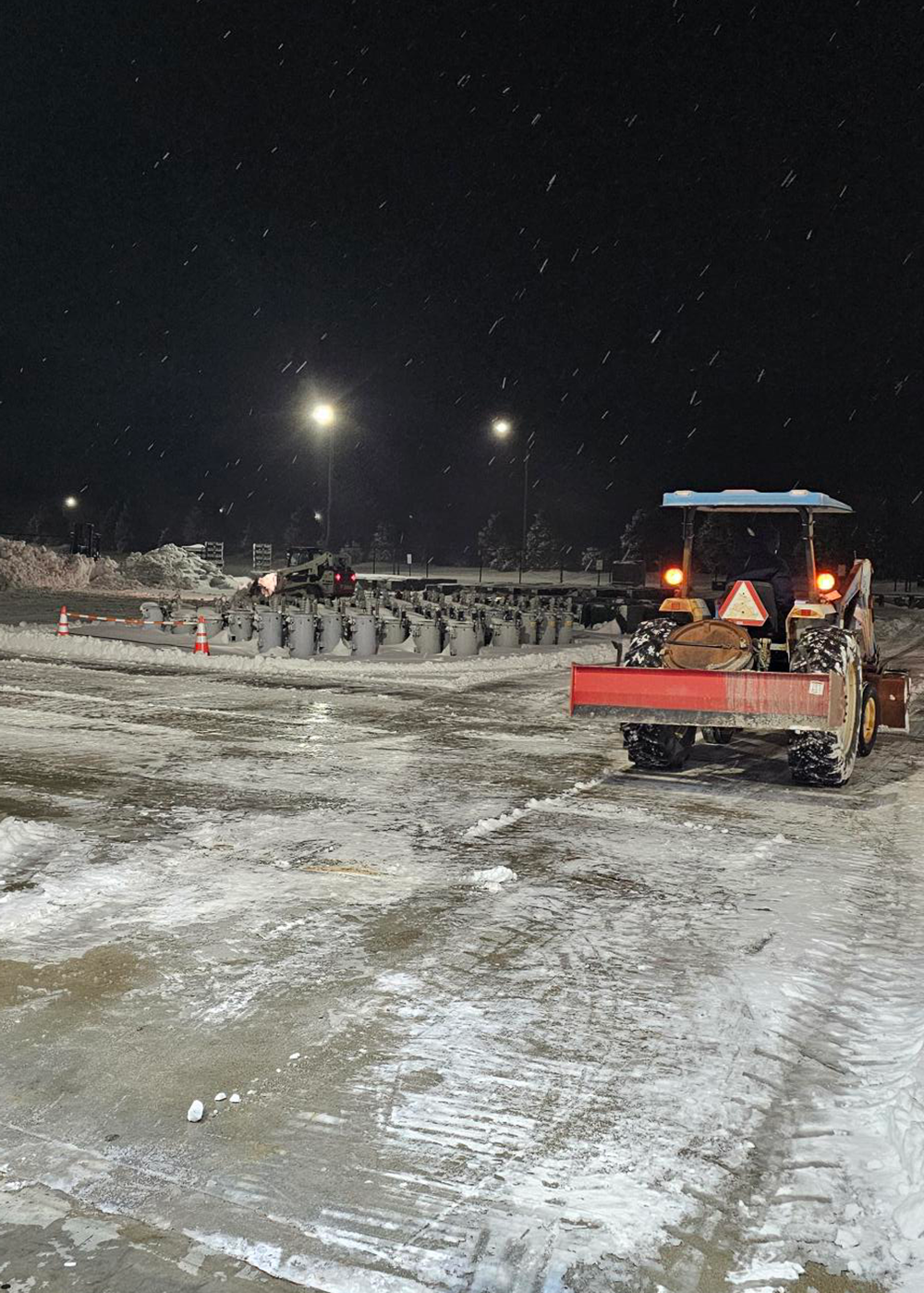
Facilities Management staff prepared for severe winter weather prior to its arrival. Areas that are tough to thaw were pretreated with ice melt, manholes, storm drains and other surface encumbrances were marked with cones, snow removal equipment was staged and tools made ready. On Saturday, January 31st through Sunday, February 1st team members used backhoes, plows, and shovels to clear snow so crews would not be delayed in responding to calls.
Standby employees from Fleet Management, Materials Management, and Water Resources assisted in between calls. Response staff members were added Sunday morning to continue removing remaining snow from walking and driving in Operations. Winter storm response continued through Thursday. Contractors also helped to remove snow at Main Office, Express, Red Banks, the LNG Plant and CNG sites.
Fleet service trucks were strategically placed with standby mechanics around the county in case they were needed to assist crews in the field. A small team remained onsite Saturday January 31st through Sunday February 1st, working to support crews with equipment cold starts, extract equipment immobilized by snow, and provide Operations Support manpower in snow clearing efforts. Materials Management provided operational continuity by supporting and maintaining safe, accessible facilities and ensuring the Central Warehouse remained open and fully operational to support GUC’s standby crews. A small team remained onsite to help keep the Operations Center open and crews stocked. Staff members were available throughout the remainder of the event ensuring materials remained available to operating departments.
Customer Relations
Customer Relations remained on standby, prepared to assist the Control Center with after-hours calls. Representatives stayed in communication with the Control Center throughout the weekends and worked remote to take customer calls on days the GUC offices were closed or had delayed openings. Call volumes were low during that time, according to Assistant Director of Customer Relations Colleen Sicley.
Public Information
Public Information kept employees updated about conditions, closures, and delayed openings. They also updated the community and customers on outages and utility conditions via social media throughout the storms. When necessary to do so, they called on customers to reduce usage when it appeared Duke Energy’s generation not being able to keep up with demand across the state.
Finance
Finance headed up the logistics team ensuring the Operations Center had appropriate provisions in the kitchen to last for several days. They also ensured that cots were available for those who would need them. The LNG Plant employees utilized that resource. In advance of the storm, Finance reached out to all departments to increase Purchase Card limits if needed for standby crews who may need supplies while working during the storms.